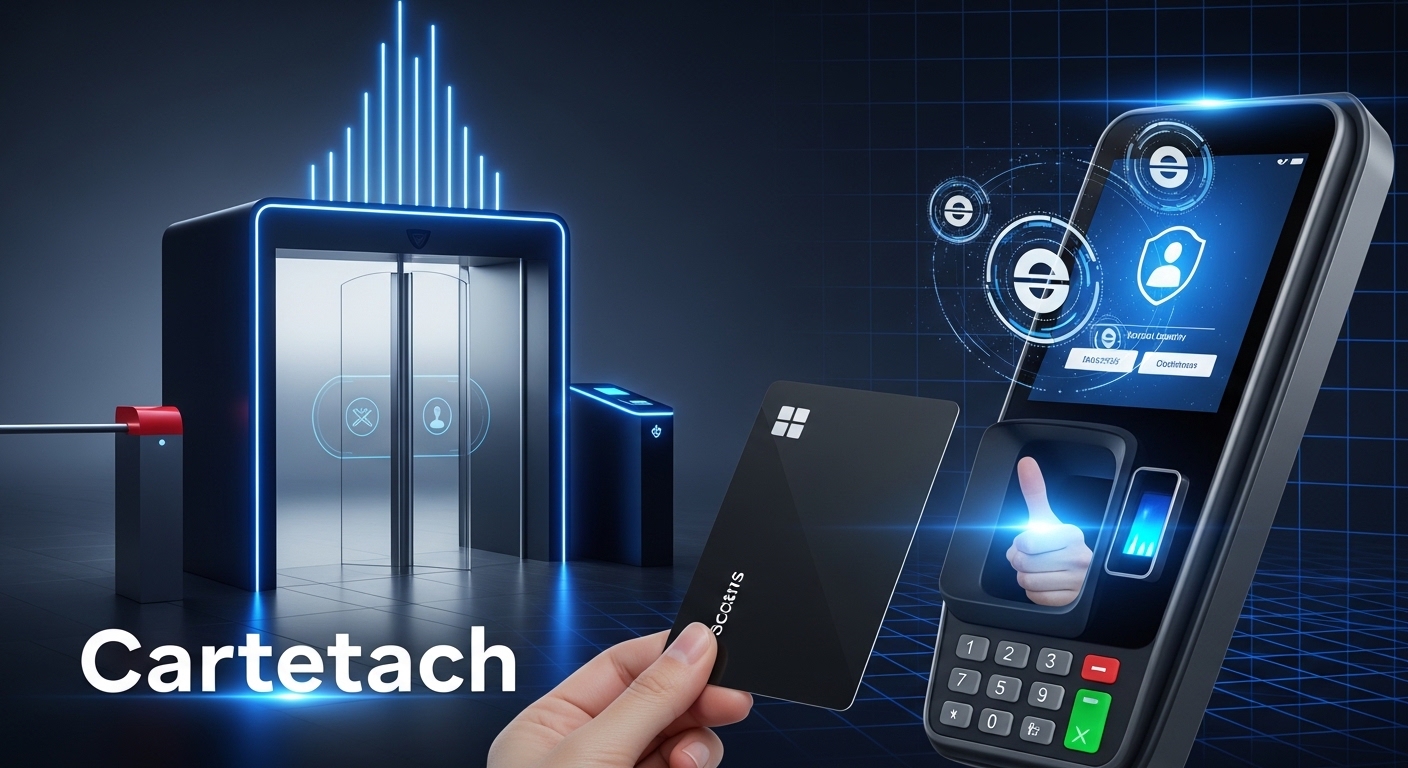
Cartetach: Secure Identity, Payments & Access Guide
In a world where digital security and seamless access matter more than ever, new technologies are redefining how people verify identity, make payments, and control entry to physical or online spaces. One emerging concept attracting interest is cartetach. Often described as a next-generation system combining secure identity, advanced payment capabilities, and intelligent access control, cartetach represents the future of trusted interactions.
Consumers today expect speed, convenience, and safety at the same time. They want to tap for payments, unlock doors instantly, verify identity securely, and manage credentials from mobile devices. Traditional systems often treat these needs separately, but cartetach suggests a unified solution.
This complete guide explores cartetach, including its meaning, core features, benefits, real-world applications, security model, business use cases, future trends, and why it matters in modern digital life.
| Topic | Details |
|---|---|
| Main Focus | Identity, payment, access control |
| Core Technology | Encryption and smart chip systems |
| Best For | Businesses, institutions, consumers |
| Key Benefit | Secure convenience |
| Future Value | High-growth digital infrastructure |
What Is Cartetach?
Cartetach is commonly described as an advanced technology concept focused on secure identity management, payment systems, and controlled access. It appears to combine multiple functions traditionally handled by separate tools such as ID cards, payment cards, security badges, and digital credentials.
At its core, cartetach emphasizes trust. When someone pays, enters a building, or proves identity, the system aims to make that process fast while maintaining strong protection. This usually involves encrypted communication, chip-based authentication, tokenization, and permission controls.
The appeal of cartetach lies in integration. Instead of carrying multiple cards or relying on disconnected platforms, users can manage several functions through one secure ecosystem. A single credential might allow office access, cafeteria payment, parking entry, and secure login.
As security risks and convenience demands both increase, solutions like cartetach become more relevant across corporate, educational, retail, and government environments.
Why Cartetach Is Gaining Attention
Interest in cartetach is growing because traditional systems often feel outdated. Many organizations still use separate badges, passwords, cash systems, and manual identity checks. These methods create friction and security gaps.
Modern users expect instant experiences. They want contactless payments, mobile credentials, and password-light authentication. Cartetach aligns with these expectations by combining convenience with protection.
Another reason for rising attention is cybersecurity. Data breaches, identity theft, and unauthorized access have made stronger authentication a priority. Systems built around encryption and chip intelligence are more appealing than legacy methods.
Hybrid work and smart campuses also contribute to demand. As people move between home, office, coworking spaces, and digital systems, flexible credential management becomes essential.
Cartetach therefore gains relevance not only as a technology upgrade but as a response to changing lifestyles and security realities.
Core Components of Cartetach
To understand cartetach, it helps to examine the components typically associated with it. These elements work together to create a secure and efficient ecosystem.
The first major component is encrypted identity credentials. This means user data is protected during storage and transmission, reducing interception risks.
The second is smart chip or NFC capability. This allows tap-based interactions for payments, entry systems, and quick authentication.
Third is centralized management software. Administrators can assign permissions, deactivate lost credentials, monitor access logs, and manage updates remotely.
Fourth is multi-use functionality. A single credential can support payments, identity proof, access permissions, and account login.
| Component | Purpose |
|---|---|
| Encryption | Protects data |
| Smart Chip / NFC | Enables tap actions |
| Management Platform | Controls permissions |
| Multi-Use Credential | Replaces multiple tools |
| Analytics | Tracks usage securely |
Cartetach in Secure Identity Verification
Identity verification is one of the strongest use cases for cartetach. Many industries need to confirm that a person is truly authorized before granting services or access.
Traditional ID systems can be forged, lost, or copied. Cartetach-style systems improve this through digital certificates, chip-based validation, biometrics compatibility, and encrypted authentication.
For example, a university could issue smart student credentials that verify enrollment, library rights, meal plans, and building access. A hospital could confirm staff identity before allowing entry to restricted areas or medical systems.
Digital identity solutions also help online services. Users may verify themselves through secure devices rather than relying solely on weak passwords. This reduces fraud and improves trust.
As identity becomes more central to digital life, secure systems like cartetach offer long-term value.
Cartetach and Smart Payment Systems
Payments are another important area where cartetach can shine. Consumers increasingly prefer contactless, mobile, and frictionless transactions. Slow checkout lines and physical cash dependence continue declining in many markets.
Cartetach-style systems may support tap payments through smart cards, wearables, or mobile credentials. Transactions can be encrypted and tokenized, improving privacy compared with older magnetic stripe methods.
Businesses benefit through faster service, lower handling costs, and improved customer satisfaction. Users benefit through convenience and reduced need to carry multiple payment tools.
Common payment scenarios include:
- Campus cafeterias
- Transit systems
- Retail stores
- Office vending areas
- Parking payments
- Event ticket purchases
When combined with identity features, payment experiences become even smoother.
Access Control Through Cartetach
Physical and digital access control is a growing priority for organizations. Cartetach can modernize this area by replacing traditional keys, static codes, or outdated swipe cards.
Smart credentials allow doors, gates, elevators, lockers, and restricted zones to respond only to authorized users. Permissions can be changed instantly from a management dashboard.
This flexibility is especially valuable for changing teams, contractors, visitors, and temporary staff. Instead of rekeying locks or sharing passwords, access can be granted or revoked digitally.
Cartetach systems may also create audit trails. Administrators can review when access occurred, helping with compliance and investigations.
Modern access control is not only about security—it is also about operational efficiency and user convenience.
Benefits of Using Cartetach
There are several reasons organizations and users may adopt cartetach systems. The biggest advantage is combining multiple functions into one secure platform.
Users carry fewer cards, remember fewer credentials, and move through daily tasks faster. Organizations reduce administrative burden by managing identity, payments, and access centrally.
Security also improves through encryption, permission controls, and easier credential deactivation if something is lost.
Additional benefits include scalability, data insights, and improved user experience.
| Benefit | Outcome |
|---|---|
| Convenience | Fewer tools to manage |
| Security | Stronger protection |
| Efficiency | Faster processes |
| Flexibility | Easy permission updates |
| Scalability | Supports growth |
Cartetach for Businesses and Enterprises
Businesses often manage employees, visitors, vendors, and facilities across multiple locations. Cartetach can simplify this complexity.
An enterprise may issue one smart credential for building entry, secure printing, cafeteria spending, workstation login, and parking. This reduces fragmentation and support costs.
Human resources teams benefit during onboarding. New hires can receive digital credentials quickly, while departing employees lose access instantly when roles end.
Retail and hospitality businesses may also use cartetach concepts for loyalty programs, staff access, and customer payment convenience.
Operationally, integrated systems often outperform patchwork solutions because they are easier to monitor, maintain, and improve.
Cartetach in Schools and Universities
Educational institutions are ideal environments for cartetach solutions because students and staff need many services daily.
A single credential can support classroom access, library borrowing, dorm entry, meal plans, attendance verification, transport use, and event tickets. This creates a smoother campus experience.
Administrators gain visibility and better control over permissions. Lost cards can be disabled quickly, reducing misuse.
Students especially appreciate mobile-friendly systems because they already manage much of life through smartphones. Universities adopting smarter infrastructure may also strengthen their reputation for innovation.
Security Features That Make Cartetach Strong
Security is central to cartetach. Convenience alone is not enough if systems are vulnerable. Strong platforms often combine several layers of defense.
These may include:
- End-to-end encryption
- Tokenized payment data
- Multi-factor authentication
- Device binding
- Remote credential revocation
- Access logs and alerts
- Role-based permissions
Layered protection matters because no single defense is perfect. Combining methods significantly reduces risk.
Strong security design also builds user trust, which is essential for adoption.
Cartetach vs Traditional Systems
Traditional systems usually separate identity, payment, and access functions. Someone may carry an ID badge, a bank card, a building fob, and multiple passwords. Cartetach aims to unify these experiences.
Legacy tools also create admin burden. Separate vendors, databases, and support workflows increase cost and complexity.
Modern integrated systems are usually faster to scale, easier to audit, and more convenient for users. However, migration requires planning and investment.
The comparison often comes down to long-term efficiency versus short-term familiarity.
Challenges in Implementing Cartetach
Like any new system, cartetach adoption can face challenges. Upfront hardware costs, software integration, staff training, and privacy planning all require attention.
Some organizations resist change because old systems still “work enough.” But delayed modernization can create hidden inefficiencies and security risks.
Compatibility with legacy infrastructure may also require phased rollout strategies rather than instant replacement.
Successful implementation depends on planning, communication, and choosing technology that matches actual needs.
Future Trends in Cartetach Technology
The future of cartetach likely includes mobile-first credentials, biometric verification, AI fraud detection, and deeper integration with smart buildings.
Wearables may replace physical cards in some environments. Voice or facial verification could support high-security use cases. AI may detect unusual access behavior automatically.
Users will also expect privacy transparency—knowing what data is stored and how it is used. Ethical design will become increasingly important.
As cities, campuses, and offices become smarter, cartetach-style systems may become standard infrastructure.
How to Choose the Right Cartetach Solution
Organizations evaluating cartetach solutions should focus on practical criteria rather than flashy features.
Important considerations include:
- Security certifications
- Ease of use
- Integration capability
- Mobile support
- Scalability
- Reporting tools
- Vendor reputation
- Support quality
The best system is not always the most complex. It is the one people can adopt confidently while meeting security and operational goals.
Why Cartetach Matters in Daily Life
People increasingly expect life to be seamless. They want to move through spaces, pay quickly, and verify identity without friction. Cartetach matters because it helps deliver that experience responsibly.
For businesses, it improves operations. For users, it saves time. For institutions, it strengthens security. Few technologies offer value across so many stakeholders simultaneously.
As digital and physical experiences merge, systems like cartetach become more important each year.
Final Thoughts on Cartetach
The true value of cartetach lies in combining security with simplicity. Many technologies promise convenience but weaken trust. Others provide security but create frustration. Cartetach aims to balance both.
Whether used in workplaces, schools, retail, or public infrastructure, integrated credential systems are shaping the future. Organizations that adopt wisely can create smoother and safer experiences for everyone involved.
Conclusion
Cartetach represents the next frontier in secure identity, payment systems, and access control. By combining advanced encryption, smart chip technology, and centralized management, it offers a practical solution for modern convenience and security needs.
As digital expectations rise, people and organizations need systems that are fast, flexible, and trustworthy. Cartetach meets that demand by turning fragmented tools into one intelligent ecosystem.
FAQs
What is cartetach?
Cartetach is a modern concept focused on secure identity, smart payments, and access control through integrated technology.
Is cartetach only for businesses?
No. It can be useful for schools, campuses, events, retail, offices, and public systems.
How does cartetach improve security?
It may use encryption, smart chips, tokenization, access logs, and permission controls.
Can cartetach support mobile devices?
Yes, many future-ready systems are expected to support smartphones and digital credentials.
Why is cartetach important?
It simplifies daily interactions while improving trust, speed, and operational efficiency.